A Summa of the Summa
by Peter Kreeft
Table of Contents
IAT = I answer that… ONC = On the contrary… Obj = Objection
- Methodology: Theology as a Science (I, 1)
- First Article, Second(IAT), Third(IAT), Fourth Article, Fifth Article, Sixth(IAT), Seventh(IAT), Eight(Obj2, IAT), Ninth(IAT), Tenth(Obj1, ONC, IAT)
- Proofs for the Existence of God (I, 2)
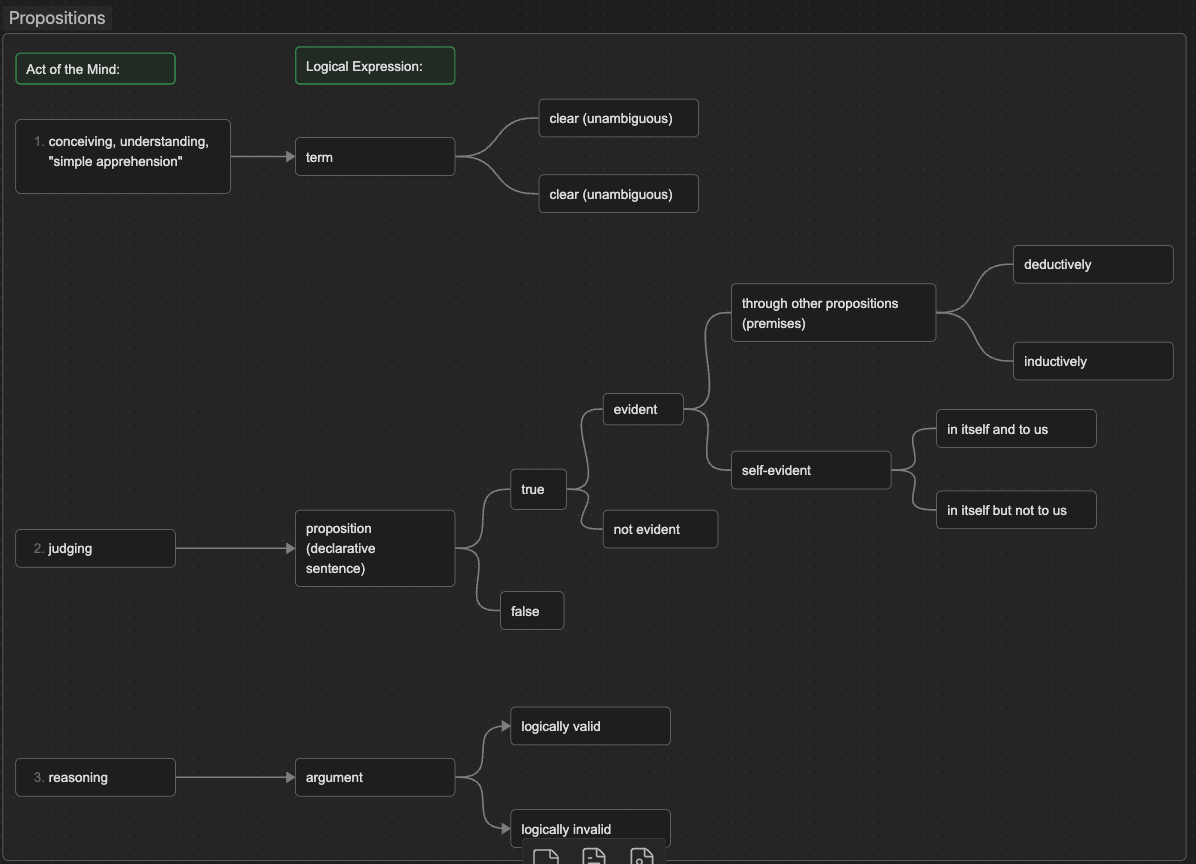
- First Article, Second Article, Third Article
- The Nature of God (I, 3-26)
- Question 3 Of the Simplicity of God: First Article, Second Article, Third(ONC), Fourth(Obj2, ONC, IAT), Fifth(IAT), Sixth(Obj1, IAT), Seventh(Obj2, IAT), Eight(Obj3, IAT)
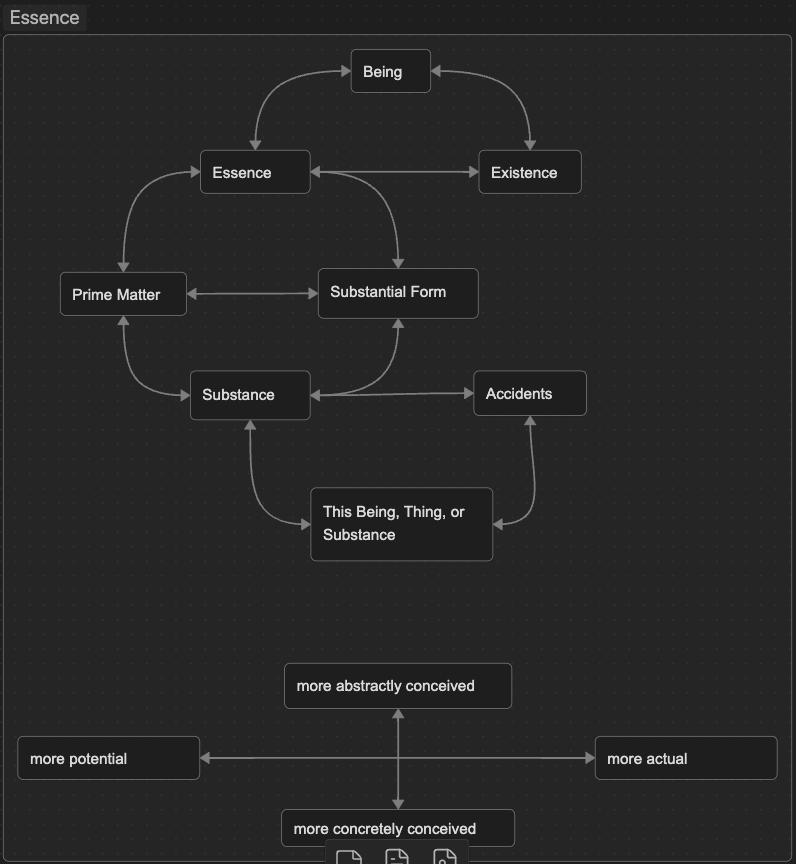
- Question 4 The Perfection of God: First Article, Second(IAT), Third(Obj2, Obj4, ONC, IAT)
- Question 5 Of Goodness in General: First(ONC, IAT), Second(IAT), Third(ONC, IAT), Fourth Article, Fifth Article, Sixth(IAT)
- Question 6 The Goodness of God: First(Obj2), Third(IAT), Fourth(ONC, IAT)
- Question 7 The Infinity of God: First(IAT), Second(Obj1, IAT), Third(ONC), Fourth(IAT)
- Question 8 The Existence of God in Things: First, Second(ONC, IAT), Third(IAT), Fourth(IAT)
- Question 9 The Immutability of God: First(Obj3, IAT), Second(ONC, IAT)
- Question 10 The Eternity of God: First(IAT), Second(Obj4), Third(ONC), Fourth(ONC, IAT), Fifth(IAT)
- Question 11 The Unity of God: First(ONC, IAT), Third(ONC, IAT), Fourth(ONC)
- Question 12 How God is Known by Us: First(Obj2, IAT), Third(Obj2), Fourth(IAT), Fifth(Obj2, IAT), Sixth(ONC, IAT), Seventh(Obj1), Eighth(Obj4, ONC), Eleventh(Obj3, ONC, IAT), Twelfth(ONC, IAT)
- Question 13 The Names of God: First(IAT), Second(IAT), Fourth(IAT), Fifth(ONC, IAT), Sixth(ONC, IAT), Seventh(IAT), Ninth(ONC, IAT), Eleventh(ONC, IAT), Twelfth(Obj3, IAT)
- Question 14 Of God’s Knowledge: First(ONC, IAT), Fourth(IAT), Fifth(Obj2, ONC), Sixth(IAT), Eighth(ONC, IAT), Ninth(IAT), Tenth(IAT), Eleventh(IAT), Twelfth(IAT), Thirteenth(ONC, IAT)
| Cosmic Hierarchy | Name | Science | Matter & Form | Potency & Act | Kind of Knowledge |
|---|---|---|---|---|---|
| 8 | God | theology | pure form | pure act | knowledge = one with being |
| 7 | angels | angelology | pure form | essence (potency) & existence (act) | intuitive |
| 6 | men | anthropology psychology | rational soul = form of body | essence & existence and matter & form | rational |
| 5 | animals | zoology | sensitive soul | ” | sensory |
| 4 | plants | botany | vegetative soul | ” | none |
| 3 | things | physics | no soul; purely material forms | " | " |
| 2 | chemical elements | chemistry | first rudimentary forms (wet/dry, hot/cold) | " | " |
| 1 | prime matter | none | formless matter | pure potency | ” |
14. Question 15 Of Ideas: First (IAT), Second(IAT)
15. Question 16 Of Truth: First(ONC, IAT), Third(IAT), Fourth(Obj1, Obj1), Fifth(ONC, IAT), Seventh(IAT), Eighth(IAT)
16. Question 17 Concerning Falsity: First(IAT), Second(IAT), Third(IAT)
17. Question 18 Life of God: First(IAT), Third(Obj1, IAT)
18. Question 19 The Will of God: First(Obj2, IAT), Second(IAT), Third(IAT), Fourth(Obj2), Fifth(Obj1, Obj2, IAT), Sixth(IAT), Seventh(Obj1, Obj3, IAT), Eighth(ONC, IAT), Ninth(Obj3, ONC, IAT), Eleventh(IAT)
19. Question 20 God's Love: First(Obj1, ONC, IAT), Second(Obj4, ONC, IAT), Third(ONC, IAT), Fourth(IAT)
20. Question 21 The Justice and Mercy of God: First(ONC, IAT), Second(ONC, IAT), Third(Obj2), Fourth(ONC, IAT)
21. Question 22 The Providence of God: First(IAT), Second, Third(IAT), Fourth(Obj1, ONC, IAT)
22. Question 23 Of Predestination: First(ONC, IAT), Third(Obj2, IAT), Fifth(Obj2, ONC, IAT), Seventh(IAT), Eighth(IAT)
23. Question 25 The Power of God: First(Obj1), Second(Obj1, IAT), Third(IAT), Fourth(IAT), Sixth(Obj3, ONC, IAT)
24. Question 26 Of the Divine Beatitude: Fourth(ONC, IAT)
- Cosmology: Creation and Providence
- Question 44 The Procession of Creatures from God, and of the First Cause of All Things: First(Obj1, IAT), Fourth(Obj1, Obj3, IAT)
- Anthropology: Body and Soul (I, 75-78)
- Epistemology and Psychology (I, 79-93)
| Metaphysics | Epistemology | Anthropology | |
|---|---|---|---|
| Plato | Forms exist separately from matter | Innate species and knowledge by recollection | Soul is a substance separate from body |
| Aristotle and St. Thomas | Forms exist in material substances | No innate species and knowledge by sensation and abstraction | Soul is the form of the body |
- Ethics
- Happiness (I-II, 1-5)
- Willing (I-II, 6-13)
- Good and Evil (I-II, 18-21)
- Love (I-II, 26-29)
- Virtues (I-II, 55-70)
- Vices (I-II, 71-89)
- Law (I-II, 90-108)
Five Ways
I
These five are not the proofs themselves but ways, i.e., indications or summaries of proofs. The proofs themselves are elsewhere worked out in much greater detail; e.g., in the Summa contra Gentiles the first way takes thirty-one paragraphs (Bk 1, chap. 13); here, it takes only one.
II
These five ways are really essentially one way: the “cosmological” argument, or argument from the cosmos. The logical structure of all five proofs is the same:
- There are really three premises:
- an implicit logical principle: the tautology that either there is a First Cause or there is not. (The proofs prove there is a First Cause by showing that the alternative entails a contradiction; this presupposes the Law of Excluded Middle: that there can be no middle alternative between two mutually contradictory propositions; thus, to disprove one is to prove the other.)
- an explicit empirical datum (motion, causality, etc.)
- a metaphysical principle, which is neither tautological, like (a), nor empirical, like (b), but known by metaphysical insight or understanding: e.g., “If there is no First Cause, there can be no second causes”, or “nothing can cause itself to be”.
- There are two possible hypotheses to explain the empirical data:
- that there is a God (First Mover, Uncaused Cause, etc.)
- that there is no God.
- St. Thomas shows in each of the five “ways” that the metaphysical principle (1c) coupled with the metaphysical data (1b) makes 2b impossible. Thus only 2a is left, if we admit 1a to begin with.
- However, two “weakening” qualifications must be added:
- Each proof individually, and all five together, prove only a thin slice of God, a few attributes of God. More attributes are deduced later in the Summa, and much that is known by Revelation is not provable by reason at all (e.g., the Trinity, the Incarnation, and Redemption).
- Each proof ends with a sentence like “And this is what everyone calls God”—an observation about linguistic usage which answers Pascal’s complaint that “the God of the philosophers is not the God of Abraham, Isaac, and Jacob” by saying in effect that the God proved here by philosophy, though “thinner” than the God revealed in the Bible, is “thick” enough to refute an atheist. There are simply no other candidates for the position of First Cause, Unmoved Mover, Perfect Being, Cosmic Designer, etc.
III
These five ways are not by any means the only way of proving the existence of God in the history of philosophy. There have been at least two dozen very different sorts of attempts to prove the existence of God (below). St. Thomas carefully and modestly confines himself to the most scientific proofs alone.
(An Extremely Brief summary of 24 Arguments for God’s Existence)
- Ontological (Anselm): “God” means “that which has all conceivable perfections”; and it is more perfect to exist really than only mentally; therefore God exists really. The most perfect conceivable being cannot lack any conceivable perfection.
- Cosmological
- Motion: Since no thing (or series of things) can move (change) itself, there must be a first, Unmoved Mover, source of all motion.
- Efficient Causality: Nothing can cause its own existence. If there is no first, uncaused cause of the chain of causes and effects we see, these second causes could not exist. They do, so It must.
- Contingency and Necessity: Contingent being (beings able not to be) depend on a Necessary Being (a being not able not to be).
- Degrees of Perfection: Real degrees of real perfections presuppose the existence of that perfection itself (the Perfect Being).
- Design: Design can be caused only by an intelligent Designer. Mindless nature cannot design itself or come about by chance.
- The Kalaam (Time) Argument: Time must have a beginning, a first moment (creation) to give rise to all other moments. (The “Big Bang” seems to confirm this: time had an absolute beginning fifteen to twenty billion years ago.) And the act of creation presupposes a Creator.
- Psychological
- from mind and truth
- Augustine: Our minds are in contact with eternal, objective, and absolute truth superior to our minds (e.g. 2+2=4), and the eternal is divine, not human.
- Descartes: Our idea of a perfect being (God) could not have come from any imperfect source (cause), for the effect cannot be greater than the cause. Thus it must have come from God.
- from will and good
- Kant: Morality requires a perfect ideal, and requires that this ideal be actual and real, somewhere.
- Newman: Conscience speaks with absolute authority, which could come only from God.
- from emotions and desire
- C.S. Lewis: Innate desire corresponds to real objects, and we have an innate desire (at least unconsciously) for God, and Heaven.
- Von Balthasar: Beauty reveals God. There is Mozart, therefore there must be God.
- from experience
- Existential Argument: If there is no God (and no immortality) life is ultimately meaningless.
- Mystical experience meets god.
- Ordinary religious experience (prayer) meets God. (Prayer of the Skeptic: God, if you exist, show me”—a real experiment.)
- Love argument: If there is no God of Love, no Absolute that is love, then love is not absolute. Or, the eyes of the love reveal the infinite value of the human person as the image of God.
- from mind and truth
- The argument from the analogy of other minds, which are no harder to prove than God (Plantinga).
- The practical argument: Pascal’s Wager: To bet on God is your only chance of winning eternal happiness, and to bet against Him is your only chance of losing. It is the most reasonable bet in life.
- Historical
- from miracles: If miracles exist, a supernatural miracle-worker exists.
- from Providence: perceivable in history (e.g., in Scripture) and in one’s own life.
- from authority: Most good, wise, reliable people believe in God.
- from saints: You see God through them. Where do they get their joy and power?
- from Jesus: If God is unreal, Jesus was history’s biggest fool or fake.
(This list is not exhaustive, but illustrative. Maritain and Marcel, for example, have formulated other, more complex arguments for God.)